


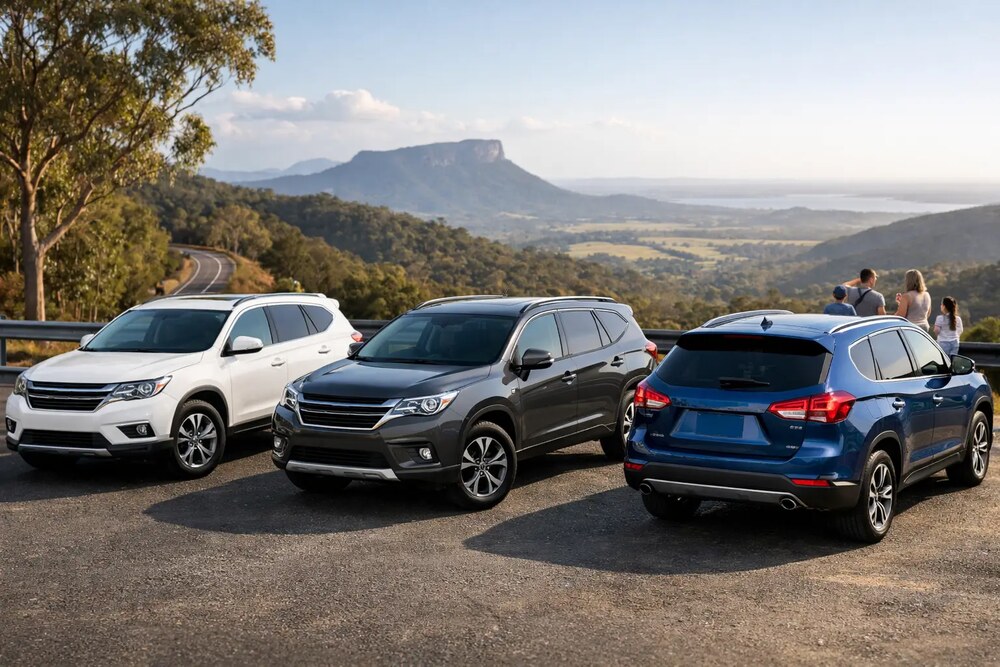
A family SUV has to do more than look good in the driveway. It needs to handle school drop-offs, weekend sport, a full trolley of groceries and the occasional long holiday drive without making every trip feel cramped. The best used family SUVs balance usable space, safety, reliability and running costs - but the right choice depends on your family’s size, budget and where you drive.
A compact five-seater can be the smarter buy for a young family in the suburbs. For three children, regular carpooling or trips with grandparents, a larger SUV with a third row may be worth the extra fuel and tyre costs. Start with how you will use the vehicle most weeks, rather than buying based on the one annual road trip.
10 best used family SUVs to put on your shortlist
These models are common on the Australian used-car market, which can make comparison shopping, servicing and finding parts easier. Always check the specific year, grade and condition, as equipment and safety technology can vary across a model range.
Toyota RAV4
The Toyota RAV4 is a popular choice for good reason. It is practical, easy to drive, generally holds its value well and offers a roomy cabin for a medium SUV. Later petrol and hybrid versions are particularly appealing to families who cover plenty of kilometres, with the hybrid often using noticeably less fuel in stop-start traffic.
Demand can keep used prices high, so value is not always about finding the cheapest RAV4. Look for a complete service history, confirm whether scheduled servicing has been completed and inspect the cargo area and rear seats for signs of hard family use.
Mazda CX-5
The Mazda CX-5 suits buyers who want a family vehicle that still feels composed and comfortable on the road. The interior is usually a step above many rivals of its age, and there are petrol and diesel options across the used market. Petrol versions are often the straightforward choice for mainly urban driving.
It is a five-seater, so take child seats with you when inspecting. Check that rear-facing seats leave enough room for front passengers, particularly if taller adults regularly travel up front.
Subaru Forester
The Subaru Forester makes sense for families who value visibility, all-wheel drive and a square, usable cabin. Its tall roofline and wide-opening doors can make loading children easier, while the boot is practical for prams, sports gear and camping equipment.
Most versions use a continuously variable transmission, so pay attention to how smoothly it responds on the test drive. Service records matter, especially for older examples, and buyers should make sure any advertised driver-assistance features are working as intended.
Honda CR-V
A used Honda CR-V is often an excellent space-for-money purchase. It has a family-friendly layout, a comfortable ride and, in many versions, one of the more accommodating rear seats in its class. Earlier seven-seat models can suit families needing occasional extra seating, although the third row is better for children than adults.
Do not assume every CR-V has the same features. Compare the exact variant for safety equipment, infotainment and seating configuration. A tidy, well-maintained example can be a more sensible purchase than a newer SUV with a patchy history.
Mitsubishi Outlander
The Mitsubishi Outlander is a strong option when a third row is essential but a large four-wheel drive is not. It is available in five- and seven-seat forms, and newer generations offer a more refined cabin and improved safety equipment. Plug-in hybrid versions can be attractive for households with regular charging access and shorter daily trips.
The trade-off is that the third-row seats and boot space behind them are limited. Fold the rear row down and assess the space you will actually have for bags, a pram or holiday luggage.
Kia Sorento
For families who genuinely need seven seats, the Kia Sorento is one of the better used choices. It is comfortable on longer trips, offers a more adult-friendly third row than many medium SUVs and is available with petrol, diesel and, in later models, hybrid powertrains.
A Sorento costs more to run than a small SUV, particularly on tyres and fuel, but it may prevent the need for a second larger vehicle. Check the remaining factory warranty where applicable, along with servicing requirements and the condition of all three seating rows.
Hyundai Santa Fe
The Hyundai Santa Fe shares much of its appeal with the Sorento but has its own cabin layout and driving character. It is a practical seven-seat family SUV with a comfortable ride and a broad range of used examples available in Australia. Diesel variants are often favoured by drivers who tow or travel longer distances.
If you are considering a diesel, ask about the vehicle’s typical use. Short, infrequent trips are not ideal for every modern diesel system. A pre-purchase inspection can help identify issues that are not obvious during a quick drive.
Nissan X-Trail
The Nissan X-Trail is a popular medium SUV with sensible dimensions for city parking and family life. Five-seat versions offer a useful boot, while selected generations were sold with seven seats. It is easy to find across different price points, making it worth comparing carefully by age, kilometres and condition.
Test the transmission in slow traffic and on an open road, and check for complete servicing. The occasional third row is useful, but buyers needing seven seats every day may be better served by a larger Sorento or Santa Fe.
Volkswagen Tiguan Allspace
The Volkswagen Tiguan Allspace gives buyers a more polished seven-seat alternative with a relatively compact footprint. It has a flexible cabin and can be a good match for families wanting strong road manners and modern features without moving to a very large SUV.
Maintenance history is particularly important with any used European vehicle. Confirm servicing has been completed to schedule, check the operation of electronics and get an independent inspection before agreeing on price. The right example can be rewarding, but neglected servicing can become expensive.
Skoda Kodiaq
The Skoda Kodiaq is another capable seven-seater that deserves attention, especially for families who value clever storage and a well-finished interior. It is generally comfortable, spacious and practical, with a third row suitable for children or occasional adult use.
As with the Tiguan Allspace, compare variant specifications closely and place a high value on documented maintenance. A lower-kilometre vehicle is not automatically the better buy if it has missed services or has spent long periods unused.
How to compare used family SUVs properly
Price is only the starting point. Compare the drive-away cost with likely ownership costs, including insurance, fuel, tyres, servicing and registration. A larger diesel or seven-seater may look affordable at purchase but cost more over several years than a well-priced hybrid medium SUV.
Space should be tested, not guessed. Take the pram, child seats and any regular sporting gear to the inspection. Check whether the boot floor is practical, whether the rear doors open wide enough in a car park and whether the second-row seats slide or recline. If a third row is involved, see how easily children can climb in and out.
Safety should also be assessed by the exact vehicle, not just the badge. Look for the features that matter to you, such as autonomous emergency braking, blind-spot monitoring, rear cross-traffic alert, parking sensors and a reversing camera. Older or lower-spec variants may not include equipment found on newer advertisements.
Checks before you buy a family SUV
A good listing gives you a useful starting point, but it cannot replace checking the vehicle in person. Inspect it in daylight, start it from cold where possible and allow enough time for a proper test drive. Listen for unusual noises, check that warning lights disappear after starting and test the air conditioning, windows, screens and seat adjustments.
Ask for the service books, invoices and details of recent tyre, brake or battery work. Confirm the VIN matches the paperwork and arrange a PPSR history report to check for finance owing, written-off status and theft records. An independent mechanical inspection is a worthwhile safeguard, particularly for higher-kilometre, premium or seven-seat SUVs.
When you compare listings on Carface, use the vehicle specifications, odometer reading, seller type and location to narrow the field before you make contact. Then ask direct questions about service history, ownership and condition. A transparent seller should be comfortable helping you make an informed decision.
The best family SUV is the one that fits your ordinary Tuesday as well as your annual getaway. Give yourself time to compare, inspect and verify the details, and you will be in a much stronger position to buy a vehicle your family can rely on.
