


A used SUV can make school drop-offs, weekend sport, road trips and the daily commute easier - but only if it suits the way you actually live. Before you buy a used SUV, look beyond the badge, paint colour and advertised price. The right vehicle should fit your passengers, parking space, budget and expected running costs, with a condition and history you can verify.
Start with the SUV you need, not the SUV you notice
SUV is a broad label. A compact SUV may be ideal for city parking and a couple, while a medium SUV often gives growing families the best balance of rear-seat space, boot capacity and fuel use. A large SUV can be useful for seven seats, towing or regular long-distance travel, but it usually costs more to buy, fuel, insure and maintain.
Be realistic about how you will use the vehicle most days. If you regularly carry a pram, sports gear or a large dog, inspect the boot with those needs in mind. If you need three child seats, check the second row rather than assuming three seats means three child restraints will fit comfortably. For caravans, trailers or boats, confirm the vehicle's braked towing capacity and towball download limit in the manufacturer specifications.
Also decide which features are requirements and which are nice to have. All-wheel drive can provide added confidence on loose or wet surfaces, but it is not automatically necessary for suburban driving. It can also bring higher servicing costs and tyre replacement requirements. Safety features such as reversing cameras, autonomous emergency braking and blind-spot monitoring may be worth prioritising, particularly if the SUV will carry family passengers.
Set a complete budget before you buy a used SUV
The advertised price is only the starting point. Your complete purchase budget needs to allow for stamp duty, transfer fees, registration, compulsory third party insurance where applicable, comprehensive insurance, fuel, servicing and tyres. Costs vary between states and territories, so check the local requirements before committing.
Older premium SUVs can look appealing because their purchase price has fallen sharply. However, parts, specialist servicing, tyres and repairs may still be priced like a premium vehicle. A newer mainstream model with a sound service history can sometimes be the more affordable choice over several years.
If finance is part of your plan, know your likely repayments and total loan cost before making offers. A pre-approval can provide a clearer spending limit and helps you negotiate on the vehicle price rather than making decisions based only on a weekly repayment figure.
Search and compare listings on the details that matter
Once you have narrowed your size and budget, compare similar vehicles rather than judging one listing in isolation. Look at the year, kilometres, trim level, transmission, fuel type, service history, location and seller type. Two SUVs with the same make and model can be priced very differently for good reasons.
A low odometer reading can be attractive, but it does not outweigh a patchy maintenance record or signs the vehicle has been sitting unused for a long period. Equally, a higher-kilometre SUV that has been regularly serviced, driven gently and maintained well may be a sensible buy.
Clear photographs should show more than a polished exterior. Look for images of the interior, rear seats, boot, tyres, engine bay and service books. Read the specifications carefully, especially seating capacity, drive type and fitted options. If a feature matters to you, ask the seller to confirm it rather than relying on a generic model description.
Carface makes this comparison simpler by bringing vehicle details, seller information and direct enquiry together, so you can focus your inspections on vehicles that genuinely suit your shortlist.
Ask direct questions before travelling to inspect
A useful phone call or message can save a wasted trip. Ask why the SUV is being sold, whether there is a complete service history, when it was last serviced and whether any repairs are currently needed. Confirm whether the vehicle has two keys, the owner's manuals and any accessories included in the sale.
You should also ask about accident repairs, hail damage, warning lights, finance owing and registration status. A genuine seller should be comfortable answering reasonable questions and providing documents when you inspect. If answers are vague, rushed or inconsistent with the advertisement, treat that as a reason to investigate further, not necessarily an automatic deal-breaker.
Inspect condition in daylight and take a proper test drive
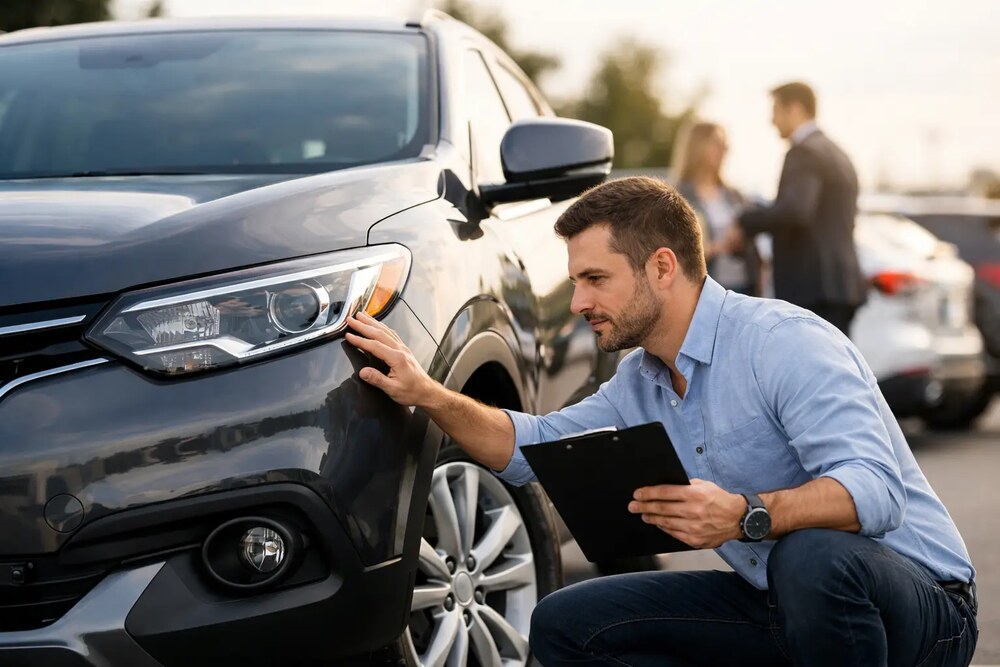
Arrange to inspect the SUV in daylight, preferably when the engine is cold. A warm engine can hide starting issues, and poor light can hide paintwork flaws. Take your time around the vehicle and do not feel pressured to make a decision on the spot.
Check that panel gaps look even and that the paint colour is consistent from one panel to the next. Small stone chips are normal on many used cars, but mismatched paint, overspray on trims or uneven panel alignment may point to previous repair work. Inspect the tyres for uneven wear, which can indicate alignment, suspension or steering problems. Tyres should also have enough tread and be the correct matching type for the vehicle.
Inside, test the features you expect to use: air conditioning, infotainment, cameras, electric windows, central locking, seat adjustments and charging ports. Lift the boot floor if practical and look for moisture, corrosion or signs of a water leak. Check the rear seats fold and return properly, especially if flexible cargo space is a key reason for choosing an SUV.
During the test drive, listen for noises when starting, braking and turning. The steering should feel predictable, the brakes should pull the vehicle up straight, and the transmission should change smoothly. Drive on a mix of local streets and faster roads where possible. For an all-wheel-drive or four-wheel-drive model, confirm the selected drive modes operate as intended.
If you are not confident assessing a vehicle yourself, organise an independent pre-purchase inspection. It has a cost, but can reveal mechanical, structural or safety concerns that are difficult to spot during a short drive.
Check the history before money changes hands
A PPSR history report is a valuable safeguard for a used vehicle purchase. It can help you check whether the SUV has money owing on it, has been recorded as written off or has been reported stolen. Match the vehicle identification number, or VIN, on the report to the VIN on the vehicle and registration paperwork.
Review the service records as well. Look for regular servicing at sensible intervals, not just a stamped book with large unexplained gaps. For diesel SUVs, ask about the driving pattern and maintenance of emissions-related components. For hybrid or electric SUVs, confirm the battery warranty details and charging equipment included.
Registration rules and roadworthy requirements vary around Australia. Do not assume that current registration means the vehicle is fault-free, or that a roadworthy certificate is a full mechanical inspection. They serve different purposes. Check the paperwork required for your state or territory and make sure the seller's name matches the registration documents.
Negotiate on evidence, then close the deal carefully
A fair offer is based on comparable listings, vehicle condition, kilometres, history and any work that needs doing soon. If tyres are near the end of their life, the next service is due or there is cosmetic damage, use those facts respectfully in your negotiation. Avoid focusing only on the lowest price you have seen online, as it may be for a different variant, condition or seller situation.
When you agree on a price, document the sale clearly. Confirm the VIN, agreed amount, deposit terms, included accessories and handover date. Use a traceable payment method, keep receipts and do not hand over the full amount until you are satisfied the required paperwork is ready. For a private sale, complete the transfer promptly through your state or territory's process.
The best used SUV is rarely the flashiest listing or the cheapest one. It is the vehicle that fits your life, stands up to careful checks and lets you leave the inspection knowing exactly what you are buying.
