


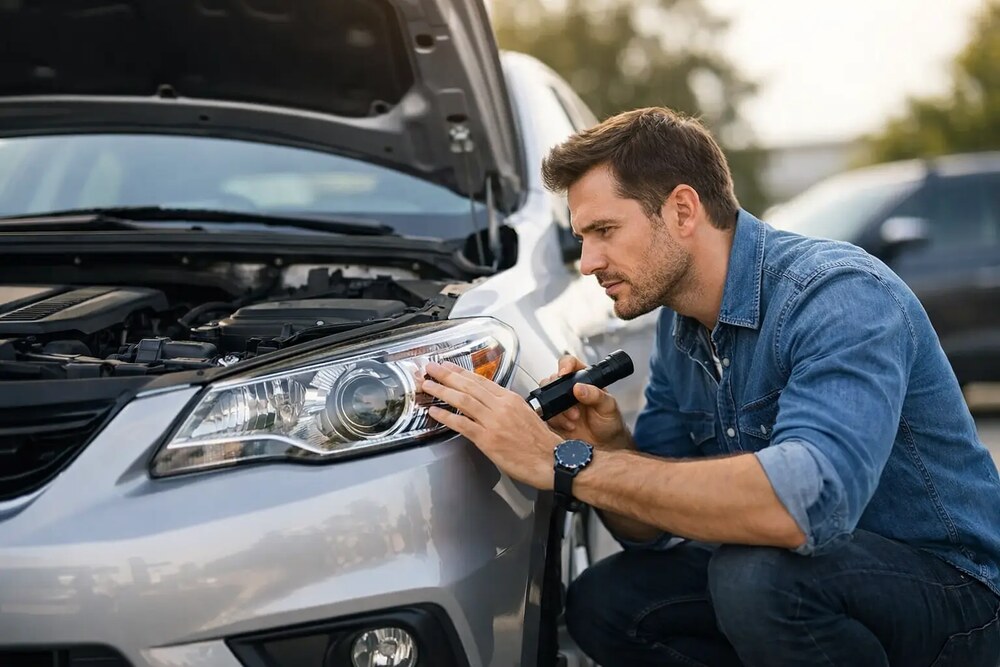
A clean exterior, low kilometres and a good price can make any listing look appealing. But when you inspect a used car, the details you uncover in the driveway and on the test drive can tell you far more than the photos. A careful inspection helps you buy with confidence, negotiate fairly and avoid inheriting someone else’s expensive problem.
You do not need to be a mechanic to spot warning signs. You do need time, good light, a clear process and the confidence to walk away if the car does not stack up. For higher-value vehicles, older cars or anything with an unclear history, an independent pre-purchase inspection is money well spent.
Before You Inspect a Used Car
Start by comparing the listing against similar vehicles for sale. Check the build year, model variant, odometer reading, transmission, fuel type, location and advertised price. A price well below comparable cars is not automatically a bargain. It may reflect condition, overdue maintenance, accident repairs or an urgent seller.
Ask the seller a few direct questions before arranging to view it. Find out why they are selling, how long they have owned it, whether it has been in an accident, whether finance is owing, and whether there are any mechanical faults or warning lights. Ask if they have service records, receipts for recent work and both keys.
Arrange to see the vehicle in daylight, ideally when the engine is cold. A seller who has already warmed the engine may have a perfectly reasonable explanation, but a cold start gives you a better chance of hearing rattles, smoke or rough idling. If possible, bring someone with you. A second set of eyes can catch details you miss when you are focused on the car you want.
Check Identity, History and Paperwork First
Before looking closely at the paintwork, make sure the vehicle is the one being advertised. Compare the vehicle identification number, or VIN, on the registration papers with the VIN plate and any stamped VIN on the vehicle. The exact location varies by make and model, so ask the seller to show you if needed.
In Australia, a PPSR history report is a sensible part of the buying process. It can help identify whether a car has money owing on it, has been written off or has been reported stolen. It does not replace a mechanical inspection, but it is a key check before you hand over a deposit or final payment.
Look through the service book and invoices rather than accepting a verbal assurance that the car has been serviced. Regular servicing at sensible intervals is reassuring, particularly where major items are due. Timing belts, transmission servicing, tyres, brakes and hybrid or EV battery checks can significantly affect what the car will cost you after purchase.
Registration status also matters. Registration is not proof that a vehicle is mechanically sound, and the requirements vary between states and territories. Check the expiry date and ask what inspection or roadworthy documentation, if any, will be provided as part of the sale.
Inspect the Exterior With a Critical Eye
Stand back from the car and view it from several angles. Look for uneven panel gaps, mismatched paint shades, overspray on trims or rubbers, ripples in body panels and doors that do not sit flush. These can indicate previous repairs. A repaired vehicle is not necessarily a poor purchase, but the repair quality and the seller’s disclosure should make sense.
Check the roof, bonnet, doors, wheel arches and lower sills for dents, corrosion and paint bubbling. Pay close attention to the front bumper and windscreen, where motorway driving often leaves stone chips. Small cosmetic marks are normal on a used car. Rust around structural areas, significant paint damage or evidence of water sitting in the boot is more concerning.
Tyres reveal plenty about how a vehicle has been maintained. Check that all four have legal tread, are not cracked or unevenly worn, and are the same size specified for the car. Uneven wear on one edge can point to alignment, suspension or steering issues. Look at the spare tyre too, if fitted, and check whether the jack and wheel brace are present.
Open and close every door, the boot and the bonnet. They should operate smoothly without excessive force, grinding or sagging. Inspect the lights and lenses for cracks, moisture and mismatched replacements. Then check the windscreen for chips and cracks, particularly in the driver’s field of vision.
Look Inside for Signs of Use and Care
The cabin should broadly match the odometer reading and the seller’s description. Worn pedal rubbers, a heavily polished steering wheel, sagging driver’s seat or damaged switches do not prove the kilometres are wrong, but they are worth questioning if the reading is unusually low.
Test the essentials rather than assuming they work. Turn on the air conditioning and make sure it cools properly. Try the heater, fan speeds, power windows, central locking, mirrors, infotainment screen, reversing camera, parking sensors, wipers, horn and every seatbelt. If the car has a sunroof, open and close it, then inspect the headlining for stains that could suggest leaks.
Lift floor mats and check the carpet for dampness, mould or a musty smell. Moisture in the cabin may come from a blocked drain or a worn door seal, but it can also be a sign of past flood damage. Check the boot floor and around the spare wheel well for the same reason.
Under the Bonnet: What You Can Check Safely
With the engine off and cool, look for obvious fluid leaks, loose hoses, damaged wiring and signs of fresh oil around the engine. Check the engine oil level and, where accessible, the coolant level. Milky-looking oil or oily residue in the coolant can be a serious warning sign, although only a qualified mechanic can diagnose the cause.
Do not remove caps from a hot engine or touch moving components. You are looking for general condition, not trying to conduct a workshop inspection. A clean engine bay is fine, but a recently steam-cleaned bay can sometimes hide leaks, so look underneath the vehicle as well.
When the engine starts, watch the dashboard. Warning lights should illuminate briefly and then switch off. A warning light that remains on, or one that appears not to illuminate at all during startup, deserves an explanation. Listen for knocking, tapping, squealing belts or an unstable idle.
Take a Proper Test Drive
A five-minute loop around the block is rarely enough. Drive on local streets and, where practical, at higher speeds. Let the seller know you want to test braking, steering, visibility and general road behaviour. If they refuse a reasonable test drive, consider that a reason to pause the purchase.
From the driver’s seat, the car should start easily, accelerate smoothly and track straight on a level road. The steering should not vibrate, pull strongly or feel vague. Test the brakes progressively in a safe place. A shudder through the pedal or steering wheel can indicate worn or warped brake components.
For an automatic, note whether gear changes are smooth and timely. For a manual, check that the clutch engages cleanly without slipping, shuddering or biting right at the top of pedal travel. Listen over bumps for clunks from the suspension, and pay attention to wheel-bearing hum that rises with speed.
If you are viewing an EV or hybrid, ask about charging habits, battery health information, remaining manufacturer battery warranty and the supplied charging cable. Check the charge port, confirm the displayed range is plausible for the vehicle, and understand that range changes with weather, driving style and battery condition.
Know When to Bring in an Expert
A professional pre-purchase inspection is especially worthwhile if you are buying a performance vehicle, 4X4, ute, luxury car, older vehicle or a car with modifications. It is also valuable when the purchase would stretch your budget. An inspector can assess the underbody, suspension, drivetrain, diagnostic fault codes and repair quality in ways that are difficult to do at a private viewing.
Do not treat an inspection report as a simple pass or fail result. Most used cars will have some wear. The useful question is whether the issues are minor and priced into the deal, or whether they create immediate safety concerns or major upcoming costs. Use confirmed faults to negotiate respectfully, or walk away when the risk is not worth it.
A transparent listing, verified seller details, a vehicle history check and an independent inspection each cover different parts of the decision. Carface brings those buyer tools into one clearer purchase journey, but the final step is still yours: inspect carefully, ask direct questions and only commit when the car feels right on paper and on the road.
The best used-car purchase is not always the cheapest one. It is the one whose condition, history and price all make sense for the kilometres ahead.
