


A cheap used car can become expensive quickly when it needs tyres, brakes, a timing-belt service and unexpected repairs within the first few months. That is why low maintenance cars are so appealing: they can help keep ownership costs predictable, especially for first-car buyers, commuters and families managing a household budget.
The key is not simply choosing a badge with a strong reputation. The best used-car choice is one with a sound service history, a design that suits how you drive and a price that leaves room for the essentials after purchase. A well-cared-for vehicle with straightforward mechanicals will often be a safer bet than a supposedly reliable model that has missed servicing.
What makes a car low maintenance?
Low maintenance does not mean maintenance-free. Every vehicle still needs regular servicing, tyres, fluids, brakes and repairs as it ages. It usually means the car has a record of reliable ownership, readily available parts and fewer complex systems likely to create large repair bills.
For most Australian buyers, a low-maintenance car tends to have a proven petrol engine, an automatic or manual transmission with a good service record, broad local parts availability and a large number of qualified mechanics familiar with the model. Popular models can be easier and more affordable to maintain because replacement parts, tyres and used components are widely available.
A simple ownership history matters just as much as the make. A one-owner hatchback serviced on schedule may be a more sensible purchase than a newer vehicle with gaps in its logbook, warning lights on the dash or signs of poor repairs.
Servicing history is the strongest clue
Ask to see the logbooks and invoices, not just a verbal assurance that the car has been serviced. Look for regular intervals, the correct grade of oil where records show it, and evidence that major scheduled work has been completed. Depending on the vehicle, this can include spark plugs, coolant, transmission fluid, brake fluid and timing-belt replacement.
A stamped logbook is useful, but detailed invoices can tell you more. They may show whether tyres, brakes, battery or suspension parts have already been replaced. These are normal ownership costs, but knowing what has been done helps you budget for what may be next.
Popular does not always mean problem-free
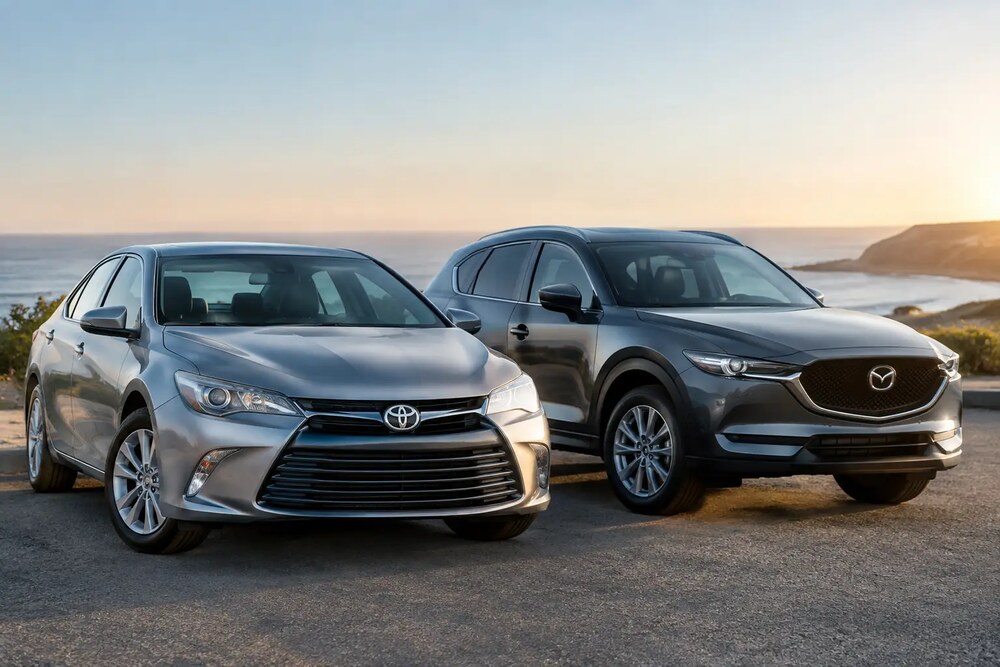
Toyota, Mazda, Honda, Suzuki and Hyundai all have models commonly considered practical used-car choices in Australia. Toyota Corolla and Yaris, Mazda3, Mazda CX-5, Honda Jazz, Suzuki Swift and Hyundai i30 are examples that often appear on used-car shortlists for their everyday usability and established service networks.
That does not mean every example will be low cost to run. A high-kilometre car that has been neglected, heavily modified or used for hard towing can need substantial work regardless of its reputation. Compare the specific vehicle in front of you, not only the model name on the boot.
Low maintenance cars by the way you drive
The right vehicle depends on your routine. Buying more car than you need can add to fuel use, tyre costs and servicing without improving your day-to-day experience.
City commuting and first cars
For suburban and city driving, a small hatchback or compact sedan is often the most economical place to start. Cars such as a Toyota Yaris, Mazda2, Suzuki Swift, Honda Jazz or Hyundai i30 are generally easy to park, use modest amounts of fuel and have tyres that are typically cheaper than those fitted to larger SUVs.
Focus on visibility, safety features, service history and condition rather than chasing the lowest odometer reading alone. A car that has travelled regular highway kilometres and been maintained properly can be a better buy than one that has sat unused for long periods.
Family cars and small SUVs
Families often need more rear-seat room, a larger boot and better long-distance comfort. A Toyota Corolla, Mazda3, Hyundai i30 or Kia Cerato may meet those needs without the running costs of a large SUV. If you do need an SUV, well-known medium models such as the Mazda CX-5, Toyota RAV4 and Honda CR-V can be practical options when their history and condition stack up.
Be realistic about wheel size. Larger alloy wheels can look great, but low-profile tyres generally cost more to replace and are more vulnerable to pothole damage. A vehicle with sensible tyre sizes may be the lower-maintenance choice over several years.
Utes, 4X4s and work vehicles
A ute or 4X4 can be dependable, but it is rarely as inexpensive to maintain as a small passenger car. Diesel servicing, heavier tyres, towing loads and off-road use all affect running costs. For a work vehicle, maintenance should be weighed against capability, payload, tray setup and how often the vehicle genuinely needs to tow or travel off sealed roads.
Inspect for signs of hard use, including worn suspension, damaged underbody protection, uneven tyre wear, towbar wear and modifications that have not been properly engineered or documented. A standard, regularly serviced ute may be easier to own than a highly modified one.
Petrol, diesel, hybrid or electric?
Fuel type changes the maintenance picture, but there is no universal winner.
A conventional petrol car remains a practical choice for many drivers because workshops know them well and parts are readily available. They suit a broad mix of short and long trips, provided servicing stays on schedule.
Diesel can make sense for frequent country driving, towing or high annual kilometres. However, newer diesels can be less suited to repeated short trips, particularly where emissions systems do not get enough time at operating temperature. Confirm the car matches your driving pattern before assuming diesel will save money.
Hybrids can reduce fuel use in stop-start traffic and have fewer wear items in some areas, such as brake components due to regenerative braking. Check that the hybrid battery system has been assessed where appropriate, particularly on older examples, and ask about service records from a qualified workshop.
Electric vehicles have no engine oil changes, spark plugs or exhaust system, which can reduce routine servicing needs. Tyres, brakes, suspension, air-conditioning and 12-volt batteries still require attention. For a used EV, battery health, charging options, remaining warranty and the condition of charging equipment deserve careful consideration.
Checks to make before you buy a low-maintenance car
A thorough inspection can prevent a maintenance bargain from becoming a repair project. Start with the basics: check for oil leaks, warning lights, uneven tyre wear, smoke from the exhaust, rough starting and unusual noises during a test drive. Test the air-conditioning, windows, central locking, infotainment, cameras and every available safety feature.
Then compare the odometer reading with the vehicle's overall condition. Excessively worn pedals, steering wheels or seats can warrant questions if they do not match the kilometres shown. Look carefully at panel gaps, paint colour differences and tyre dates, as these may reveal previous accident repairs or long periods of storage.
A PPSR history report is another sensible step before handing over money. It can help identify whether a vehicle has finance owing, has been written off or is recorded as stolen. An independent pre-purchase inspection adds another layer of confidence, especially if you are considering an older car, a European luxury vehicle, a 4X4 or anything with incomplete servicing records.
When comparing listings on Carface, use the available vehicle details to look beyond the headline price. Seller type, odometer reading, transmission, fuel type, location and service information can help you narrow the field before arranging an inspection. Verified seller details and clear photographs also make it easier to ask the right questions early.
Avoid false economies
The lowest-priced car in a search result is not automatically the best value. If it immediately needs four tyres, brake discs, a battery and a major scheduled service, the saving can disappear fast. Set aside a post-purchase buffer for registration, insurance, transfer costs and the first service, even when the vehicle appears well maintained.
It is also worth checking insurance costs before committing. Some performance, luxury and imported models can be affordable to buy but costly to insure, repair or source parts for. If predictable ownership is your priority, choose a vehicle with a good local support network and avoid features you do not need.
The most reliable path is simple: shortlist vehicles that suit your life, review their history, inspect them carefully and buy the best-maintained example your budget allows. That approach gives you a far better chance of finding a car that stays easy to own long after the keys change hands.
