


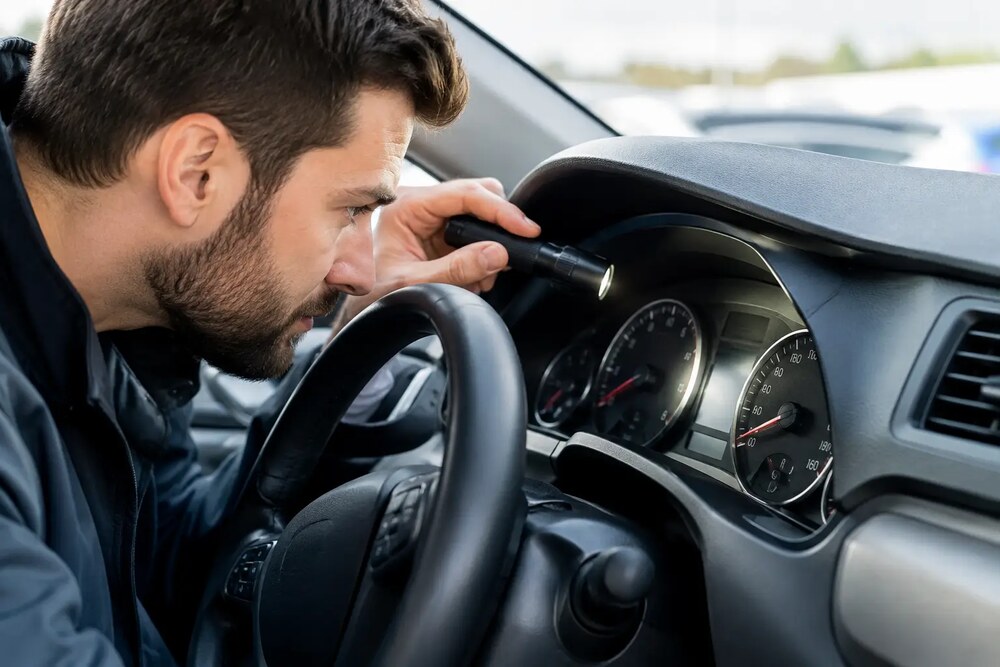
A used car showing 78,000 km can look like a smart buy. But if its pedals are worn smooth, the driver’s seat has collapsed at the bolster and the service book tells a different story, that low reading may not reflect the kilometres the car has actually travelled. Knowing how to spot odometer tampering signs can protect you from overpaying and help you choose a vehicle with confidence.
Odometer tampering, sometimes called kilometre winding or clocking, is the act of altering a vehicle’s displayed mileage to make it appear less used. It can happen on older mechanical odometers and modern digital dashboards. While digital systems are harder to alter without leaving traces, harder does not mean impossible.
A low odometer reading is not automatically suspicious. Weekend cars, second vehicles and vehicles owned by retirees may genuinely travel fewer kilometres. The key is whether the kilometres make sense when compared with the car’s age, condition, paperwork and history.
Why Odometer Tampering Matters to Used Car Buyers
Kilometres affect a used car’s market value, servicing needs and likely wear. A vehicle advertised with 90,000 km may be priced very differently from the same model with 190,000 km. If the true mileage is higher, you could be paying too much while inheriting maintenance issues that are closer than expected.
Timing belts, suspension components, tyres, brakes, transmission servicing and battery health can all be influenced by age, use or both. With hybrids and electric vehicles, kilometres also help provide context for general wear, although battery condition needs its own assessment.
Tampering can also make it difficult to judge whether scheduled maintenance has been completed. That matters when you are comparing family SUVs, commuter hatchbacks, work utes or a first car with a limited budget. The goal is not to avoid every higher-kilometre vehicle. A well-maintained car with honest kilometres can be a better purchase than a low-kilometre car with questions around its history.
How to Spot Odometer Tampering Signs Before You Buy
No single clue proves that an odometer has been altered. Look for several inconsistencies and ask direct, reasonable questions before committing to a purchase.
Compare the kilometres with the vehicle’s age
Australians drive different distances depending on where they live and how they use their car, so there is no perfect annual average. A city-based second car may cover very little ground, while a regional vehicle, fleet car or tradie’s ute may travel well above average.
Still, an unusually low figure should prompt further checking. A 12-year-old SUV with 42,000 km may be genuine, but the seller should be able to explain it through ownership history, service records or its original use. Treat an exceptionally low reading as a reason to verify, not as a reason to walk away automatically.
Let the cabin tell its story
The condition of touch points often reveals more about use than a polished exterior. Check the steering wheel, gear selector, indicator stalks, window switches, pedals, driver’s seat and seatbelt buckle. Significant shine, fading, cracking or looseness may be normal on a high-kilometre vehicle, but it does not sit neatly with an exceptionally low reading.
Look closely at the driver’s seat outer bolster, where people slide in and out. Heavy sagging or worn fabric in a vehicle claimed to have travelled only 50,000 km deserves an explanation. The same applies to deeply worn pedal rubbers or a steering wheel that appears to have been replaced recently.
A replaced steering wheel or new seat cover is not proof of misconduct. Cars are repaired and refreshed for many legitimate reasons. Ask when the work was done and keep looking for supporting evidence.
Read the service history in order
A complete service book, itemised invoices and dealer records can create a useful timeline. Check each entry for the date, odometer reading, workshop details and the type of work completed. The kilometres should increase in a logical pattern over time.
Be alert to a reading that drops between services, a long gap with no explanation or handwriting that appears inconsistent across multiple entries. Also check whether stamps identify real businesses and whether invoices match the vehicle identification number, registration or plate details where available.
Digital service records are increasingly common, particularly for newer vehicles. Ask the seller whether servicing was completed by a dealership, independent workshop or fleet provider, and request available documentation. If a seller says records have been lost, that does not end the conversation, but it does increase the value of an independent inspection.
Check inspection and registration paperwork
Depending on the state or territory, roadworthiness inspections, safety certificates, registration checks and previous sale documents may record kilometres. These documents can help establish whether the reading has moved forward consistently.
The exact paperwork varies across Australia. A Victorian roadworthy certificate is not the same as a Queensland safety certificate, and the information recorded may differ. Focus on the dates and odometer readings that are available rather than assuming every document will provide a complete history.
If the car has been registered interstate, ask for documents from earlier ownership where possible. A sudden change in state is not suspicious on its own, but it can make the history harder to follow.
Inspect the dashboard and surrounding trim
On older cars with mechanical odometers, uneven number alignment, scratched instrument-cluster screws or damage around the dashboard can be warning signs. Digital dashboards do not show misaligned number wheels, but the instrument cluster may still reveal evidence of removal or replacement.
Check for mismatched trim, loose clips, fresh tool marks or panels that do not sit correctly. Again, these signs can result from legitimate repairs, including replacement of a failed instrument cluster. A genuine replacement should usually have supporting invoices, with the original and replacement kilometre readings documented.
Compare the listing with the car in front of you
Read the advertisement again during the inspection. Does the odometer reading match the listing? Do the photos show the same kilometres? Has the seller described the vehicle as low-kilometre but provided no history to support it?
Also check that the vehicle identification number, registration details and build information match the paperwork. A PPSR history report is a sensible part of this process. It can help you check whether a vehicle is recorded as encumbered, written off or stolen, and it confirms key identifying details. It does not, however, guarantee that the odometer reading is accurate. Use it alongside records and inspection, not as a substitute for them.
Questions Worth Asking the Seller
A transparent seller should be comfortable answering straightforward questions. Ask how long they have owned the vehicle, why they are selling it, where it was serviced and whether the odometer or instrument cluster has ever been replaced.
If the vehicle has very low kilometres for its age, ask how it was used. “It was my mum’s weekend car” may be entirely believable when the interior condition, service history and ownership details all align. If answers are vague, change over time or conflict with the documents, take that seriously.
For dealer vehicles, ask what history checks and preparation have been completed. For private sales, request time to review records and arrange an inspection. Pressure to pay a deposit immediately, especially before seeing paperwork, is a reason to slow down.
When an Independent Inspection Is the Smart Move
An independent pre-purchase inspection is one of the clearest ways to reduce uncertainty. A qualified mechanic can assess mechanical wear, identify repairs, inspect diagnostic information where appropriate and compare the vehicle’s overall condition with its stated kilometres.
This is particularly worthwhile for higher-value vehicles, older 4X4s, European cars, performance models and work vehicles that may have had demanding use. It can also help first-time buyers who are not confident judging tyres, suspension, leaks or signs of accident repair.
An inspection cannot always prove historic odometer tampering, especially if records are limited, but it can reveal whether the vehicle’s condition is consistent with what is being advertised. The small upfront cost can be far less than an unexpected repair after purchase.
What to Do If Something Does Not Add Up
Do not accuse a seller based on one worn pedal or a missing invoice. Instead, ask for clarification and supporting documents. If the explanation remains unclear, step back from the deal. There will be other cars.
Keep copies of the listing, messages, inspection findings and any records provided. If you believe a seller has knowingly misrepresented a vehicle, consumer protection agencies in your state or territory may be able to provide guidance. Where fraud is suspected, report the matter through the appropriate channels.
When you search and compare used cars, prioritise clear vehicle details, a verifiable seller and enough time to inspect properly. A good purchase should feel supported by evidence, not rushed by a tempting kilometre reading. The right car is one whose story makes sense from the odometer to the service book and everything in between.
